
Sedation dentistry
IV Sedation Dentistry in St. Louis
When you arrive for your appointment, we will determine which level of sedation is best suited to your needs.
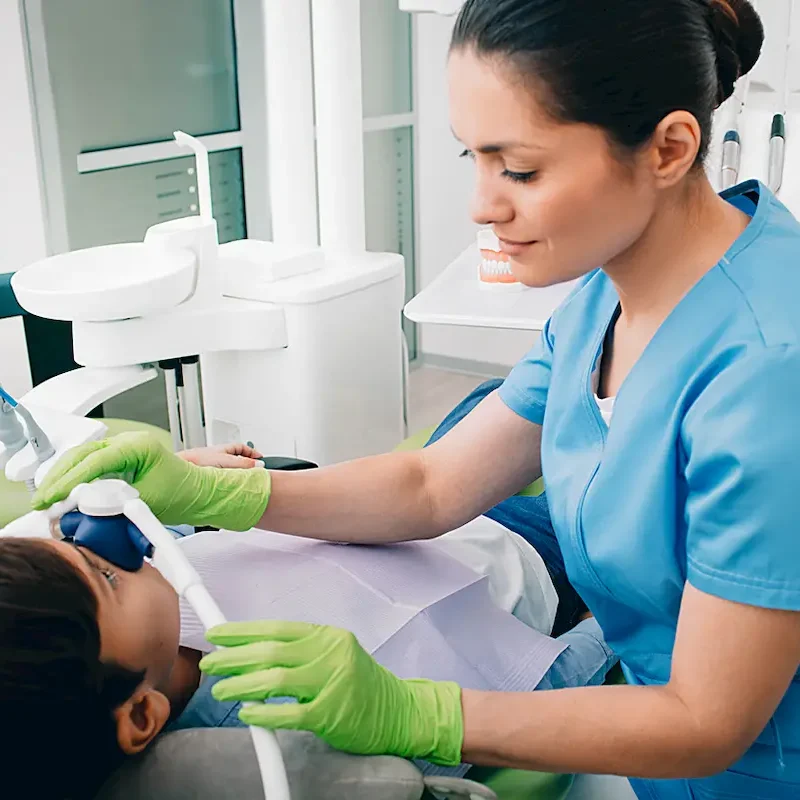
What is IV Conscious Sedation?
It is essential to understand that you are not asleep during Intravenous Conscious Sedation. You remain conscious during IV Conscious Sedation. IV Conscious Sedation involves administering drugs (medications) that calm patients, creating a drowsy, “sleep-like” state. Simply meaning, Conscious Sedation patients are:
- Conscious
- Can breathe on their own
- Can respond to questions
IV Conscious Sedation stimulates deep relaxation and a sensation of not being concerned with what’s happening. During Intravenous Conscious Sedation (IV sedation), a drug, usually an anti-anxiety medication, is administered into the blood system during dental treatment. IV Conscious Sedation and Oral Sedation can be collectively referred to as “Sedation Dentistry.”
Sedated patients are conscious, can breathe independently, and can respond to questions. Remember, you are NOT asleep for IV Conscious Sedation Dentistry. A dentist must receive two days of additional training when administering pills orally. Intravenous (IV) Sedation requires at least 60 hours of training, or a dentist can be trained in a residency program.
The methods of sedation can be achieved by:
- Administrating oral medications
- Intravenous medications
- Nitrous Oxide “laughing gas”
Using the lightest level of sedation is minimal sedation. It involves a mild sedative, such as a Valium-like medication or Nitrous Oxide (laughing gas.) This kind of sedation requires no additional training for the dentist.
When you visit for your appointment, Dr. Hoffmann, Dr. Thoms, or Dr. Behl will decide which level is best for you. We look forward to meeting you. Please call us at (314) 862-7844, and one of our friendly team members will be happy to assist you.
Who we help
Who Can Benefit From Sleep Dentistry and Sedation Dentistry?
Fear and Anxiety
Nearly half of the people with dental problems avoid dental care because of their fears and anxiety. Modern, safe anesthesia techniques allow the fearful patient to have dental procedures accomplished without the anxiety associated with dentistry.
Low Pain Threshold
People perceive pain differently. Some individuals have difficulty getting numb. General anesthesia and sedation techniques can alter this perception, and patients can be virtually pain-free during treatment.
Sensitive Gag Reflex
Some patients may experience a severe gag reflex, making it impossible for them to undergo dental care using a local anesthetic. Using anesthesia services can eliminate the problems caused by an active gag reflex.
Extensive Treatment
Completing dental treatment under general anesthesia can eliminate the need for multiple visits.
Special Needs
Individuals with physical or mental disabilities can receive comprehensive dental care in a comfortable and supportive setting. Sleep dentistry offers a safe and effective way for patients with special needs to receive the dental treatment they need. Patients can undergo a comprehensive exam, a whole mouth series of X-rays (images of their teeth), and a thorough cleaning while under general anesthesia.
Young Children
Children who are experiencing anxiety and are unable to cooperate for necessary dental treatment can benefit from anesthesia services.
Sedation options
The Different Types of Dental Sedation
There are various types of sedation used in dental medicine, which differ in intensity, administration methods, and their effects. These are the main types of dental sedation, ordered by intensity.
Level 1
Mild relaxation through a breathing mask. Effects wear off right after the procedure, so you can drive yourself home.
Level 2
Pill-based, taken before your appointment. You stay conscious and able to respond, but you’ll need a driver afterward.
Level 3 · This page
Administered intravenously for deep relaxation. Most patients remember little of the procedure. A driver is required.
Level 4 · Our specialty
Fully asleep and unaware during treatment. Reserved for more serious cases, when patients need it most.
Your St. Louis sedation dentist will discuss your medical history and the procedure with you before the procedure and decide which type of sedation is best for you.
Your appointment
What to Expect From IV Sedation for Dental Treatment
Many dental procedures can be lengthy and cause stress for patients, especially those who are suffering from dental anxiety. Small children, patients who cannot stay still for long because of other conditions, or patients with anxiety can all benefit from sedation dentistry. It enables them to complete the necessary procedures without stress or discomfort.
How to Prepare for IV Sedation and What to Expect?
Making sure you follow the doctor’s instructions closely before and after the procedure will keep the risks under control. Generally, you need to follow a few simple rules that will make the procedure and the IV sedation comfortable and minimally invasive:
- Please refrain from drinking or eating anything for 6-8 hours before your appointment.
- Don’t take any medicine that is not pre-approved by your St. Louis sedation dentist, as it might interfere with the medication.
- Get someone to drive you home after the procedure and monitor you for a few hours after the sedation.
- Wear comfortable clothing and remove any accessories, such as jewelry and belts.
Contact The Dental Anesthesia Center Today
We value our patient relationships, prioritizing the delivery of gentle dental care that you and your family deserve. When you visit for your appointment, Dr. Hoffmann, Dr. Thoms, or Dr. Behl will decide which level is best for you. We look forward to meeting you!