
What does flossing actually do? How it protects the spaces a toothbrush cannot reach, plus technique and alternatives.
Flossing has a reputation as the chore people skip and then feel guilty about at their next appointment. It helps to know what it is actually doing, because the reason is more specific than “it is good for you.” Every tooth has five surfaces. Your toothbrush reaches three: the outside, the inside, and the chewing surface. The remaining two are the walls where each tooth presses against its neighbor, and bristles can’t reach them. On a full set of adult teeth, that adds up to a surprising amount of surface area that brushing never touches.
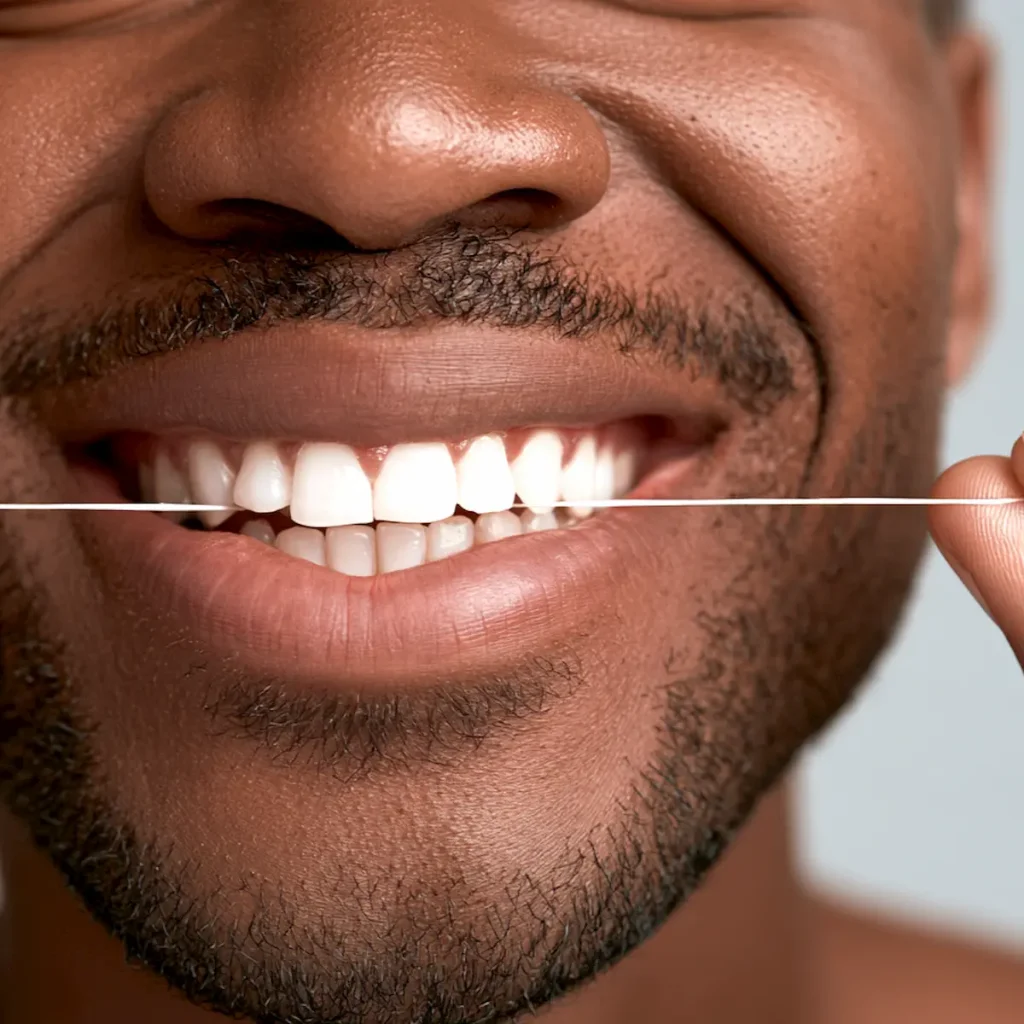


It Removes Plaque Before It Turns Into Something You Cannot Remove
Plaque is a sticky film of bacteria that begins reforming on your teeth within hours of cleaning them. When you eat, those bacteria produce acid that softens enamel.
Left alone, plaque hardens into tartar, often within a couple of days. Tartar is mineralized and bonded to the tooth. At that point, no amount of brushing, flossing, or mouthwash will remove it, and you need a dental visit to remove it with instruments. So the real function of daily flossing is timing. It clears the film from tight spaces while it is still soft enough to remove.
It Prevents the Cavities You Never See Coming
Decay that starts between two teeth is hidden from view. You cannot see it in the mirror, and it often causes no discomfort in its early stages, so you’ll usually find it on an X-ray rather than notice it at home.
By the time a cavity between teeth announces itself with sensitivity or pain, it has usually progressed further than a cavity on an open surface would. Two teeth can also be affected at once, since the same film sits against both walls.
This is one reason people are genuinely puzzled when they are told they have cavities despite brushing twice a day faithfully. Brushing never reaches where the decay started.
It Protects Your Gums and the Bone Underneath
The gum does not seal tightly against the tooth. A shallow groove forms where the two meet, and plaque collects there.
When bacteria sit in that groove, the gum becomes inflamed. That early stage is gingivitis: red, puffy, tender gums that bleed easily. It is generally reversible with consistent cleaning.
If inflammation continues, it can progress to periodontitis, where the groove deepens into a pocket, and the bone supporting the tooth begins to break down. Bone loss does not grow back on its own, and advanced gum disease is a leading cause of tooth loss in adults.
About bleeding gums. Many people see blood on the floss, decide flossing hurts, and stop. Bleeding is usually the inflammation itself talking, which means those gums are getting the least cleaning. Gentle, consistent flossing often settles the bleeding within a week or two. If it continues beyond that, have it checked.
It Helps With Breath, and It May Matter Beyond Your Mouth
Persistent bad breath frequently traces back to bacteria and trapped food in places a brush misses. Cleaning between the teeth removes the source rather than covering it.
Research has also linked gum disease with several general health conditions, including heart disease, diabetes, and complications in pregnancy. These are associations, not proof that one causes the other, and the research is ongoing. What is reasonable to say is that chronic inflammation in the mouth is worth taking seriously, and that keeping your gums healthy is sensible regardless of how that research settles.
How to Actually Do It
Technique matters more than most people realize. Snapping floss straight down and pulling it back out cleans very little and can bruise the gum.
- Use about 18 inches of floss. Wind most of it around one middle finger and the rest around the other, leaving an inch or two to work with.
- Guide it between two teeth with a gentle sawing motion rather than forcing it down.
- Curve it into a C shape against one tooth so it hugs the surface.
- Slide it just under the gumline, then move it up and down a few times.
- Curve it the other way and repeat against the neighboring tooth. Both walls need cleaning.
- Unwind to a fresh section and move on. Do not forget the back surfaces of your last molars.
Once a day is the usual recommendation. Morning or night is less important than doing it at all, though many people find bedtime works because it clears the day’s debris before several hours of reduced saliva flow.
If String Floss Does Not Work for You
The aim is clean spaces between the teeth, not loyalty to one tool. Several options do the same job:
- Floss picks and handles. Easier to manage one-handed and much easier to reach back teeth. The fixed span makes the C shape harder, so take your time at each contact.
- Water flossers. A pulsed stream that flushes debris and bacteria from between teeth and under the gumline. Often a practical choice for braces, bridges, implants, or hands that struggle with string.
- Interdental brushes. Tiny tapered brushes that work well where gaps are wider or where gum recession has opened the spaces.
- Soft picks. Useful for a quick clean during the day, though they don’t replace a thorough daily pass.
An imperfect method used every day protects more than a perfect method used twice a month.
When You Are Cleaning Someone Else’s Teeth
Caregivers doing mouth care for a child, an older adult, or a person with a disability face a harder version of the same task, and it is worth saying plainly that some days it will not go well.
A few things tend to help. Stand behind the person and support the head, which gives you a clearer view and a steadier angle than working face to face. Use a floss handle so one hand stays free. Keep sessions short and predictable, in the same place and the same order each time, and stop before frustration builds on either side. Tell the person what you are about to do before you do it.
If cooperation or sensitivity makes daily cleaning genuinely impossible, that is useful information for the dental team rather than a failure on your part. It changes how we plan care and how often we want to see the patient.
What Flossing Cannot Do?
Flossing prevents problems. It does not reverse ones that have already taken hold. Tartar has to be removed professionally, a cavity has to be treated, and bone lost to gum disease does not return because you started a new habit.
If it has been years since your last dental visit, that gap is worth closing, even if the reason was fear rather than neglect. Many of the patients we see have avoided care for a long time, and the avoidance itself is usually the hardest part to undo. Treatment can be completed comfortably with sedation or anesthesia, often in fewer visits than people expect. Start flossing tonight. Then let someone look at where things actually stand.

Consider Contacting Us Today
If dental anxiety, a sensory condition, or a long gap since your last visit has made dental care feel out of reach, we would like to hear from you. We can talk through your options before you commit to anything.
The Dental Anesthesia Center is a privately owned practice that proudly remains doctor-owned, caring for patients with severe dental anxiety, special needs, and complex treatment needs throughout the St. Louis area.
Call (314) 862-7844 or request a consultation through our contact page, and we will walk you through what to expect.