
The Dental Anesthesia Center offers sedation and general anesthesia for patients with severe anxiety, special needs, and complex medical histories.
Some people dread the dentist. Others genuinely cannot tolerate it. There’s an important difference. Dental anxiety is common and manageable for many patients with a little extra care. But for others — people with severe dental phobia, sensory processing disorders, autism, cerebral palsy, traumatic dental histories, or significant medical complexity — sitting through a standard dental appointment isn’t just uncomfortable. It’s impossible.
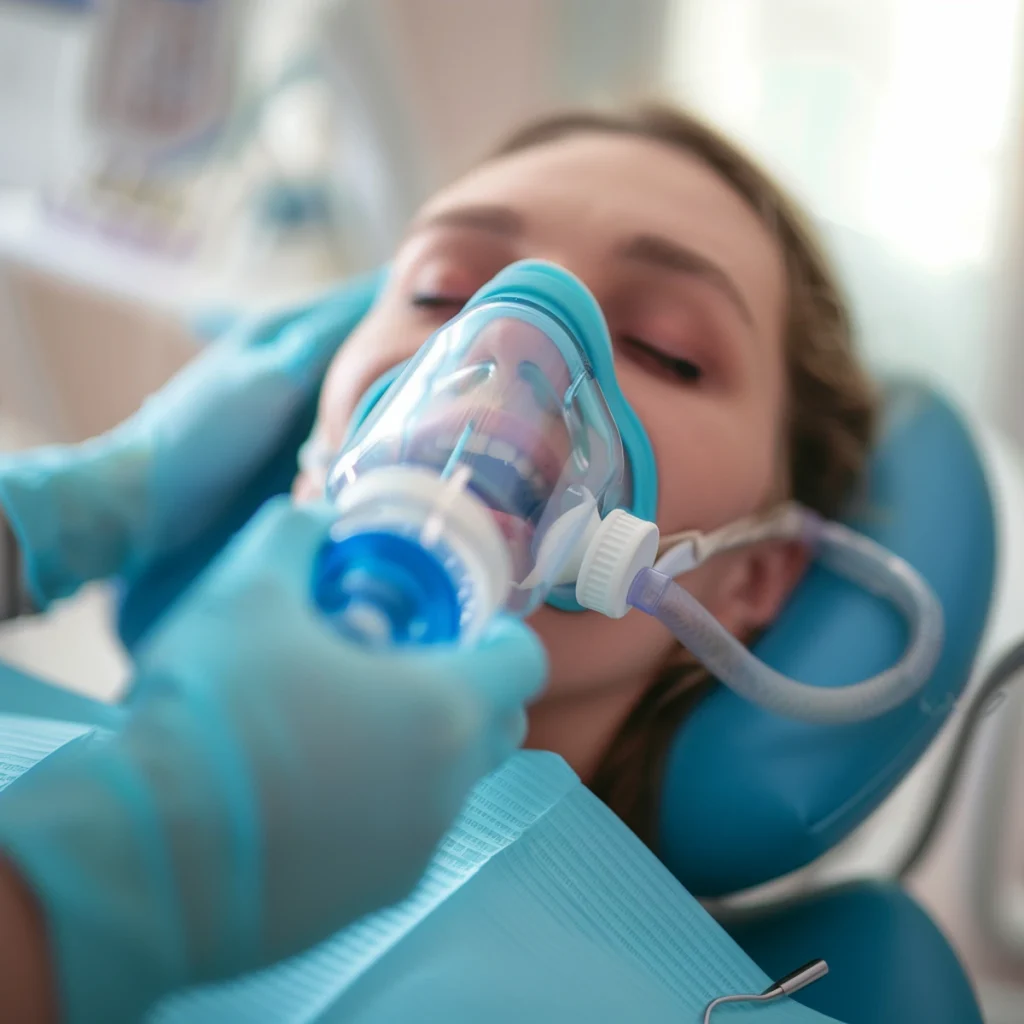


Why Standard Dental Care Doesn’t Work for Everyone
Traditional dental offices are built around the average patient. Bright overhead lights, unfamiliar instruments, unpredictable sounds, the inability to communicate mid-procedure, and the loss of physical control — for many patients, this combination triggers a genuine fear or physiological response that no amount of reassurance can override.
For patients with special needs, the barriers go further. Intellectual disabilities, movement disorders, or medical conditions may make it physically unsafe to perform dental treatment without sedation. Caregivers often spend years searching for a provider equipped to help.
The result of unmet dental needs is always the same: worsening oral health, pain, infection, and a growing sense that dental care is simply not available to them.
Sedation and Anesthesia Options That Change What’s Possible
At The Dental Anesthesia Center in St. Louis, we offer levels of sedation and anesthesia that most general dental offices do not.
Oral Sedation: Medication taken before the appointment that produces a relaxed, drowsy state. Patients remain conscious but are significantly calmer and less aware of their surroundings. A useful option for moderate anxiety with cooperative ability.
IV Sedation: Administered intravenously for a stronger, faster-acting effect. Patients are in a twilight state — deeply relaxed, minimally aware, and with little to no memory of the procedure afterward. This is appropriate for patients with significant anxiety or those who struggle with in-office cooperation.
General Anesthesia: Full unconsciousness, administered and monitored by our clinical team. This is the appropriate choice for patients with severe dental phobia, complex special needs, significant gag reflexes, or those requiring extensive treatment that cannot be reasonably completed while awake. General anesthesia allows our team to complete thorough, careful dental work in a single visit — safely and compassionately.
Who We Help
Our patients come to us from across the St. Louis metro for a wide range of reasons:
- Severe dental anxiety or phobia that has led to years of avoidance
- Autism spectrum disorder or other developmental disabilities
- Cerebral palsy, Down syndrome, or other conditions affecting cooperation
- Traumatic dental histories or previous failed attempts at treatment
- Strong gag reflex that makes standard care unbearable
- Medical complexity requiring careful anesthesia management
Many of our patients — and their caregivers — tell us they had given up on finding a provider. We hear that often, and it never stops mattering to us.
This Is Specialized Care, Not a Workaround
It’s worth being direct: what we offer is not a variation of what a general dentist does. This is hospital-level anesthesia care delivered in a dedicated clinical environment by a team trained specifically for medically complex and highly anxious patients.
If you’ve been told to “just relax” or that your anxiety should be manageable with nitrous oxide — and it hasn’t worked — this is a different category of care entirely.
You Don’t Have to Keep Waiting
Dental care shouldn’t be off-limits because of fear, disability, or a condition that makes standard treatment impossible. There are real options — and they’re available in St. Louis.
Call The Dental Anesthesia Center or submit a contact form to request a consultation. Whether you’re calling for yourself or on behalf of someone you care for, our team will take the time to understand your situation before anything else.

Frequently Asked Questions
That’s determined during your consultation. Our team evaluates your medical history, the nature of your anxiety or condition, and the dental treatment needed. We never recommend a higher level of sedation than necessary — but we also won’t under-sedate a patient who genuinely needs deeper care to be safe and comfortable.
We treat patients of all ages. Many of our special needs patients are adults whose caregivers have struggled for years to find consistent, qualified dental care. We understand the planning and communication involved, and we work closely with caregivers throughout the process.
This is exactly the kind of case we’re built for. Our clinical team reviews all medications, conditions, and history before administering any sedation. Patients with complex medical backgrounds often do better with us than they would in a general dental setting, precisely because we have the training and equipment to manage it safely.