
Your partner says you snore, but does that mean you have sleep apnea? Here’s how to tell the difference.
You sleep fine — or so you think. Your partner is the one who loses sleep, nudges you at 2 a.m., or retreats to the guest room. They’re convinced something is wrong. You’re not so sure. Maybe you’re just a loud sleeper. Maybe it’s always been this way. Maybe it’s not a big deal.
It might not be. But it’s worth knowing the difference between snoring that’s harmless and snoring that’s a symptom of something your body is actively struggling with every night — because those two things require very different responses.
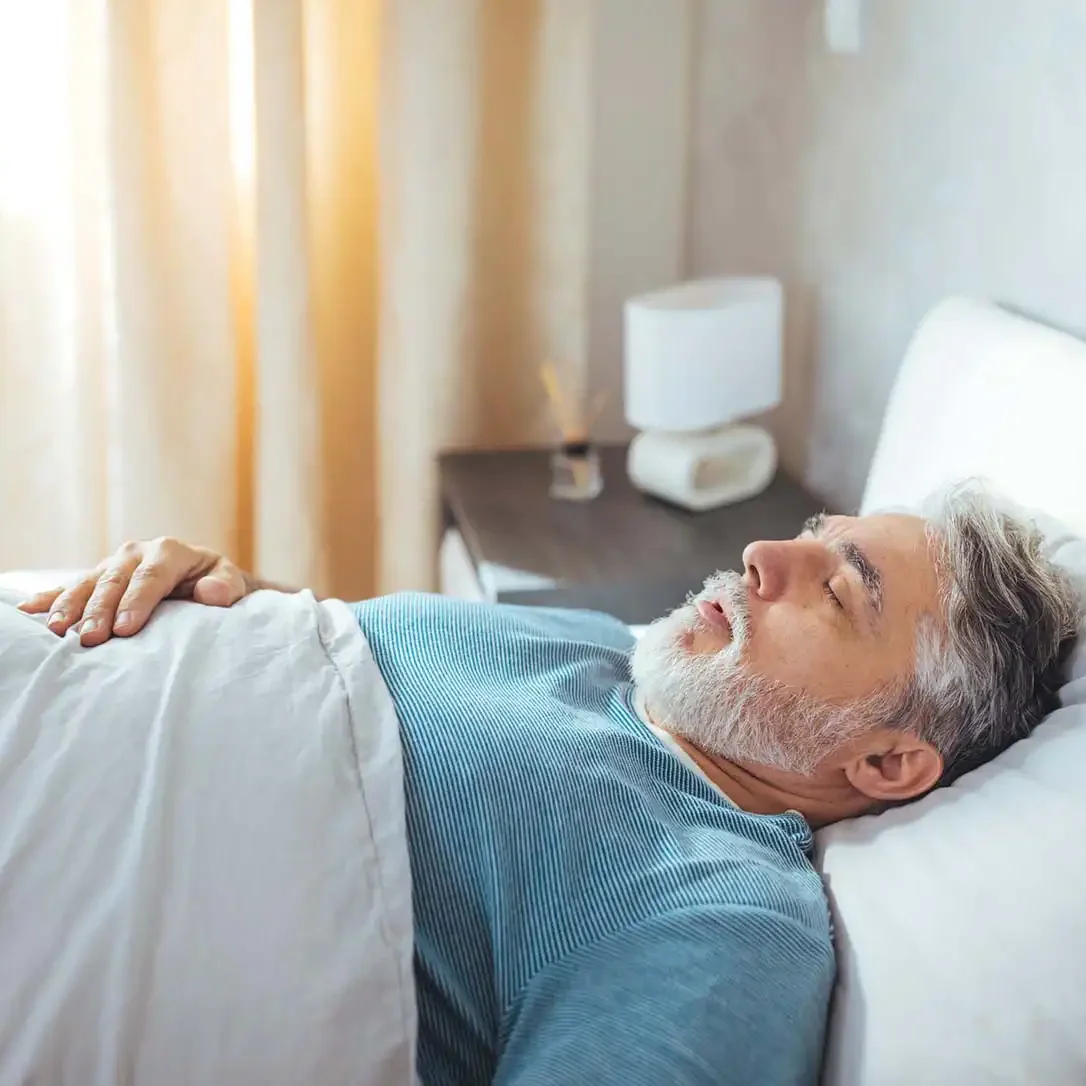


First: Snoring and Sleep Apnea Are Not the Same Thing
Snoring is a sound. It happens when airflow through the mouth and throat is partially obstructed during sleep, causing the surrounding tissue to vibrate. Plenty of people snore — due to sleep position, nasal congestion, alcohol, weight, or simply the anatomy of their airway — and have no underlying condition at all.
Sleep apnea is a disorder in which breathing actually stops during sleep, repeatedly, sometimes hundreds of times a night. The most common form — obstructive sleep apnea (OSA) — occurs when the muscles in the throat relax enough to collapse the airway entirely. The body then rouses itself just enough to resume breathing, usually without the person ever becoming fully conscious. The result is fragmented, restorative sleep, night after night, with consequences that extend well beyond feeling tired.
Snoring is one of the most common signs of obstructive sleep apnea. But not everyone who snores has sleep apnea, and not everyone with sleep apnea snores loudly. The sound alone isn’t enough to make a diagnosis — but it is a reasonable reason to look closer.
Signs That Snoring May Be More Than Just Snoring
If your partner has noticed any of the following alongside the snoring, they’re worth paying attention to:
- Pauses in breathing during sleep — moments where breathing stops and then resumes with a gasp or snort
- Restless sleep, frequent position changes, or apparent struggle during the night
- Waking with a dry mouth, sore throat, or headache
And if you’ve noticed any of the following yourself, they’re equally relevant:
- Waking up feeling unrefreshed, regardless of how many hours you slept
- Daytime sleepiness that feels out of proportion — falling asleep during conversations, while reading, or while driving
- Difficulty concentrating or remembering things
- Mood changes, irritability, or low motivation that don’t have another clear explanation
- Waking frequently during the night, sometimes feeling short of breath
None of these symptoms confirms a diagnosis on its own, but a cluster of them — especially combined with reported snoring or observed breathing pauses — is a strong signal that a sleep evaluation is worth pursuing.
Why This Matters Beyond Disrupted Sleep
Untreated obstructive sleep apnea is not simply an inconvenience. Over time, repeated oxygen drops and the sleep fragmentation they cause are associated with elevated blood pressure, increased cardiovascular risk, metabolic changes, including insulin resistance, and reduced cognitive function. People with untreated sleep apnea are also at higher risk of drowsy driving accidents — a risk that’s easy to underestimate when chronic fatigue has become your baseline normal.
This isn’t meant to alarm you. It’s meant to reframe the conversation. Your partner’s complaint isn’t just about the noise. Your body may be working much harder than it should be just to get through the night.
So, Where Does a Sleep Dentist Come In?
Sleep medicine and sleep dentistry are related but distinct. A sleep physician diagnoses sleep disorders typically through a sleep study, either conducted in a lab or at home with a portable monitor. A dentist trained in sleep medicine doesn’t diagnose sleep apnea, but plays a central role in treating it.
The most well-known treatment for obstructive sleep apnea is a CPAP machine, a device that delivers continuous pressurized air through a mask to keep the airway open during sleep. CPAP is effective, but a meaningful number of patients can’t tolerate it consistently. The mask is uncomfortable. The machine is loud. Travel with it is cumbersome. For patients who can’t or won’t use CPAP, compliance rates are low, and a treatment you don’t use doesn’t help.
Oral appliance therapy is a CPAP alternative provided by a sleep dentist. A custom-fitted oral appliance worn like a mouthguard during sleep gently repositions the lower jaw and tongue to keep the airway open. For mild to moderate sleep apnea, and for CPAP-intolerant patients with more severe apnea, oral appliances are a clinically recognized and effective option. They’re quiet, portable, and far easier for most people to tolerate over the long term.
At Dental Sleep St. Louis, the focus is on getting patients to a diagnosis first through proper sleep testing and then fitting the right appliance for those who are candidates. It is not a shortcut around the diagnostic process. It’s the treatment side of a pathway that starts with understanding what’s actually happening while you sleep.
What the Next Step Actually Looks Like
If you’re reading this because your partner said something and it’s been sitting with you, the most useful next move is a consultation, not a commitment to treatment, just a conversation. You’ll have a chance to describe what’s been noticed, ask questions about the diagnostic process, and find out whether a sleep study makes sense for you.
If a study does point to sleep apnea, you’ll know what you’re dealing with. And if an oral appliance is a good fit for your situation, you’ll have a realistic path forward to stick with. Either way, you’ll have more information than you do right now, which is always a better place to make decisions from.
Ready to Find Out What’s Actually Going On?
If snoring, poor sleep, or daytime fatigue has become a pattern, a consultation at Dental Sleep St. Louis is the right starting point. The team will walk you through the evaluation process and help you understand your options without pressure and without guesswork.
Frequently Asked Questions
The following questions are commonly asked by people who snore or by their partners who have raised concerns about their sleep.
If you have symptoms consistent with sleep apnea — snoring, observed breathing pauses, unrefreshing sleep, or significant daytime sleepiness — a sleep study is the appropriate next step to either confirm or rule out a diagnosis. A consultation is the best way to determine whether a study is indicated in your specific case.
No. Sleep apnea is a medical diagnosis made by a physician, typically based on the results of a sleep study. A dentist trained in sleep medicine is a treatment provider — they fit and manage oral appliances for patients who have already been diagnosed, or help coordinate the pathway to diagnosis for patients who haven’t been evaluated yet.
CPAP intolerance is one of the most common reasons patients seek oral appliance therapy. If you have a confirmed diagnosis of sleep apnea and have struggled with CPAP compliance, a sleep dentist can evaluate whether an oral appliance is appropriate for your situation and coordinate with your sleep physician as needed.
It’s not. Sleep apnea is underdiagnosed precisely because many people normalize symptoms over time or assume nothing can be done. Regardless of how long the pattern has been present, an evaluation is worthwhile — and effective treatment is available for patients at any stage.
For mild to moderate obstructive sleep apnea, oral appliances are clinically recognized as an effective first-line treatment. For severe sleep apnea, CPAP remains the gold standard — but for patients who can’t tolerate CPAP, an oral appliance used consistently often produces better real-world outcomes than a CPAP machine that sits unused. Effectiveness is always evaluated on an individual basis.